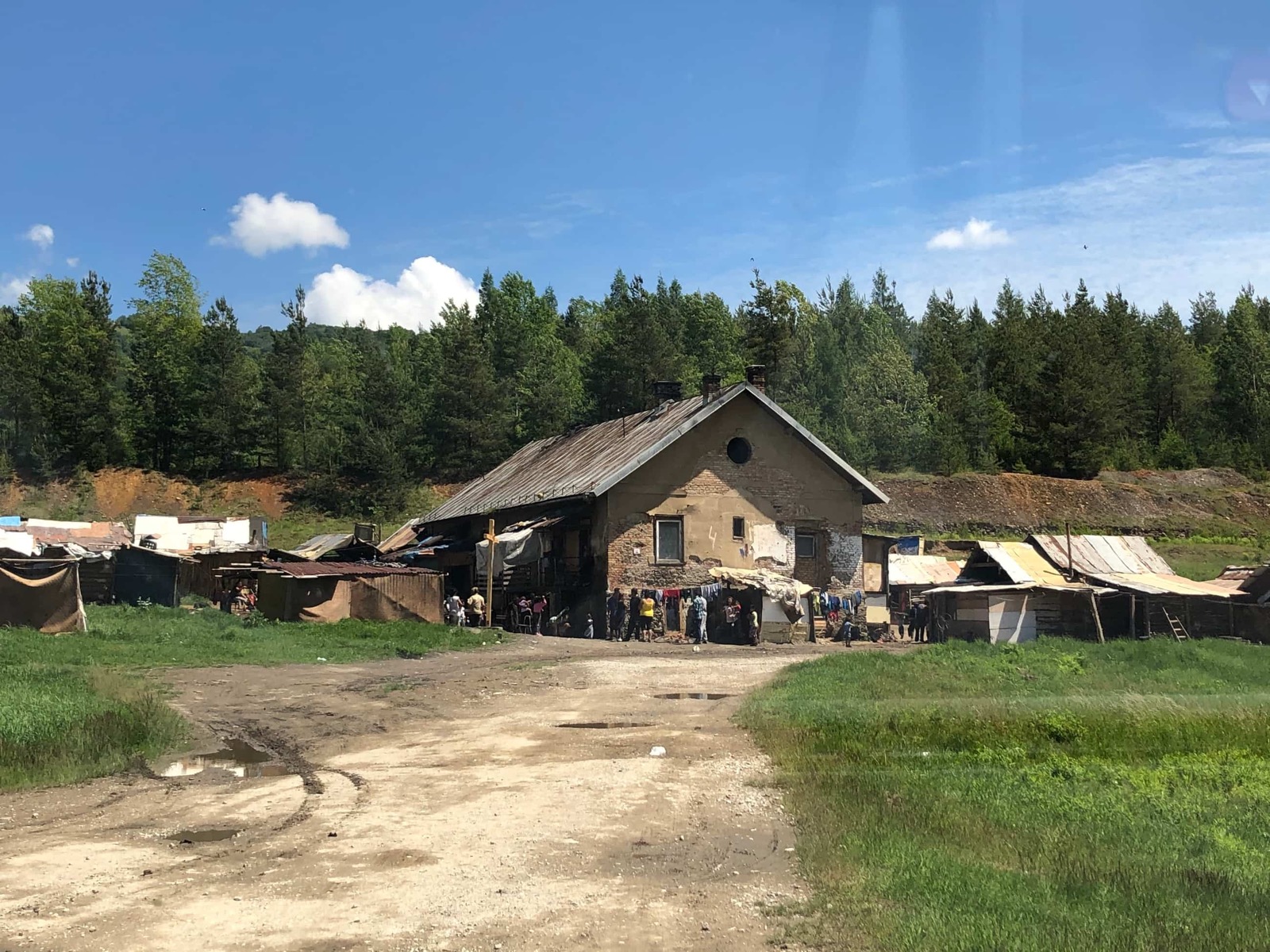
Mirko from the street
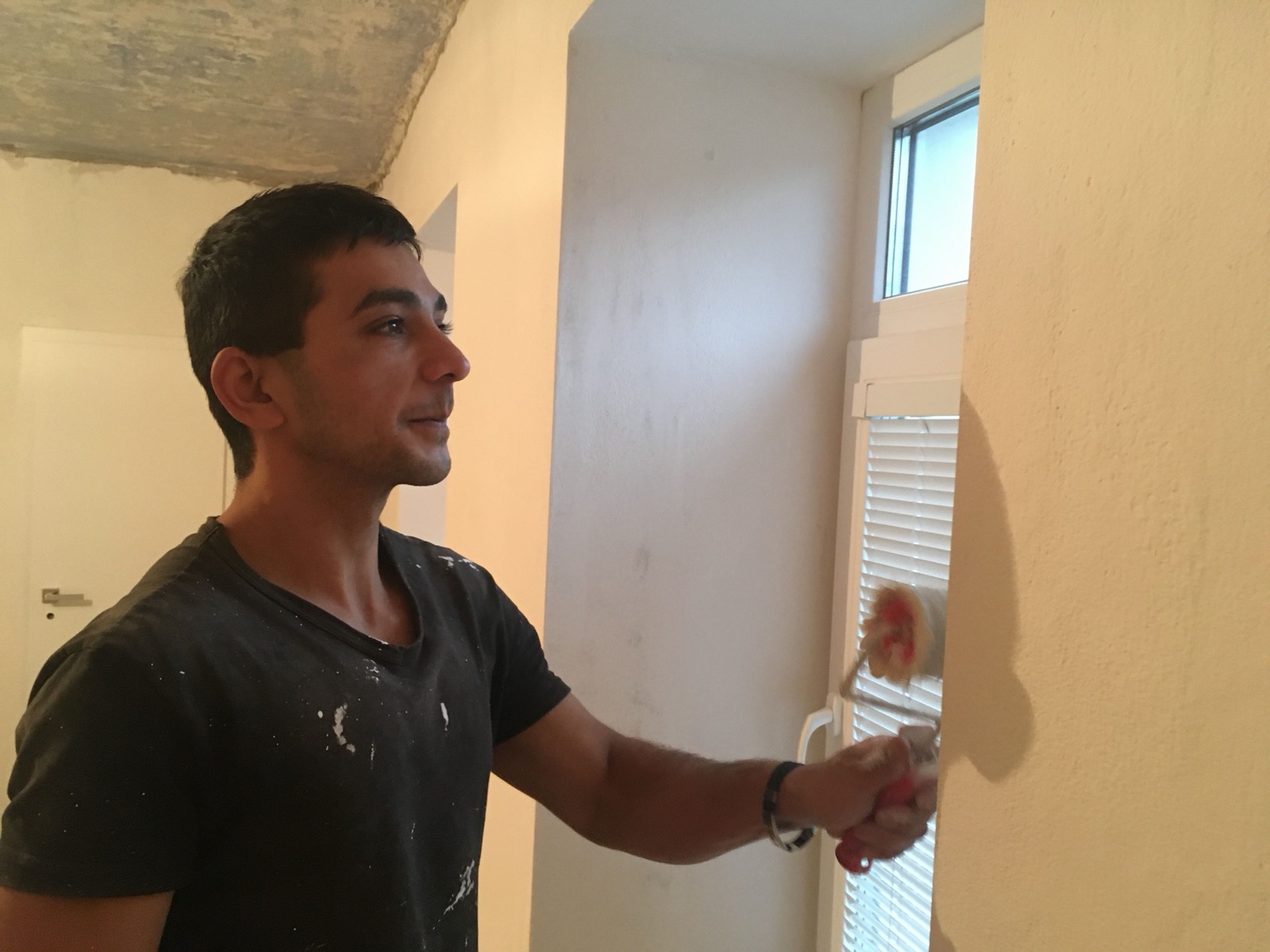
Mirko paints the little chapel
Right at the start of the year a young Roma man, Mirko Cibuľa (32), came to us. His family had left him to his fate outside on the street in the January frosts. We put him up downstairs on the sofa, not knowing exactly what to expect from him. Mirko turned out to be a very kind and fairly hard-working man, though a little lazy about learning. :) In the end he stayed with us until the end of May, when he managed to find a place to live in a hostel in Hnúšťa. In that time we went through all sorts of ups and downs. We tried to teach him to read, write and count, to smoke less, to work every day and to live in a way that he could look after himself. For despite his age he is not very independent: anyone who wants to can trick him and rob him of everything, which has already happened to him many times in his life. Now, though, he is holding on. He still lives in that hostel and comes to us to work and to learn bricklaying under the guidance of an experienced craftsman, Petr Hruška. Since April 2021 a new challenge has stood before Mirko: to keep an eye on the teenage boys who have also started learning a trade in the afternoons, and to pass on to them something of what he himself has already learned.
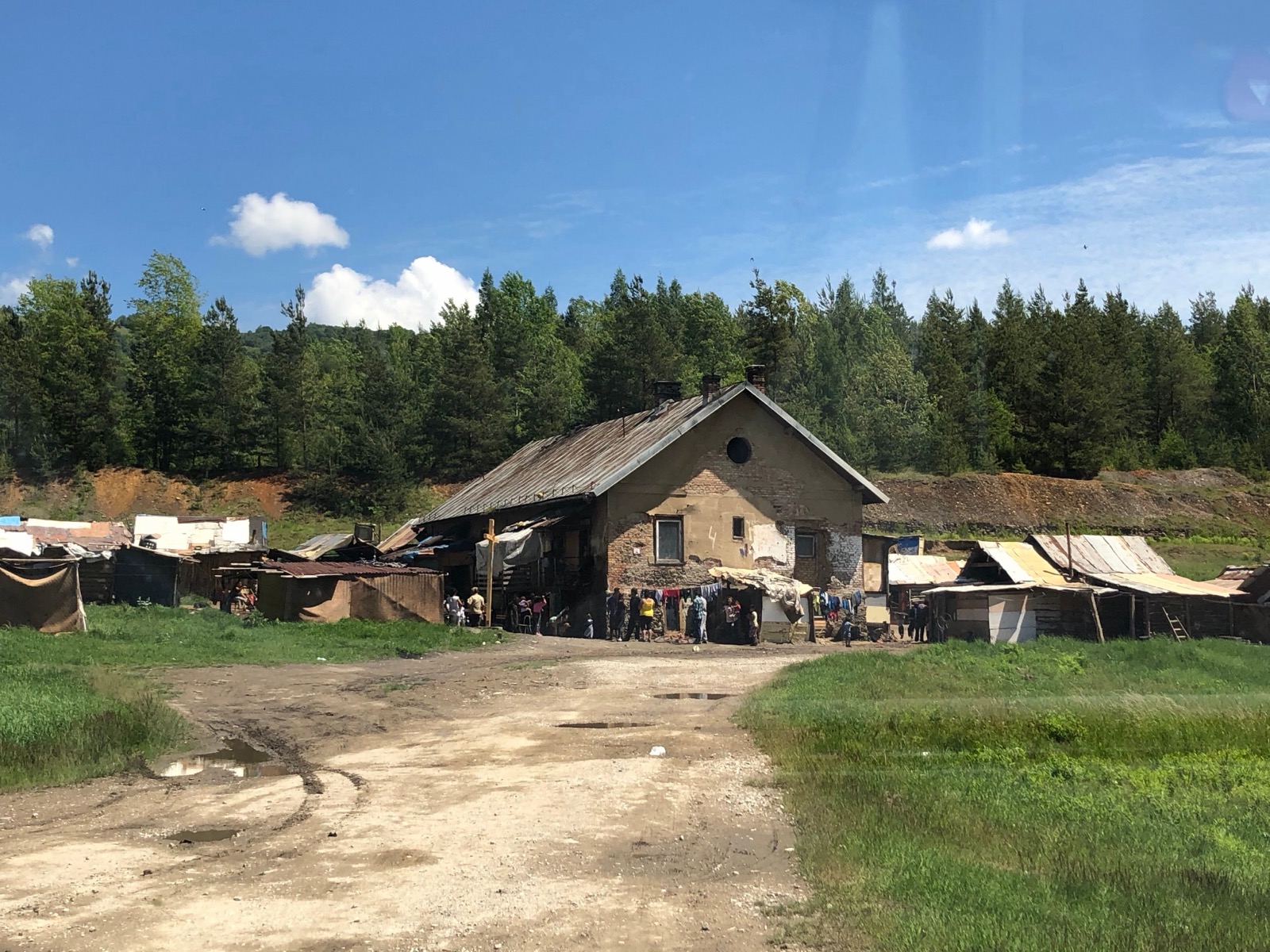
The Roma settlement of Mútnik is one of the few in Slovakia without electricity (no fridge, no washing machine...)
Lessons all year round in Mútnik
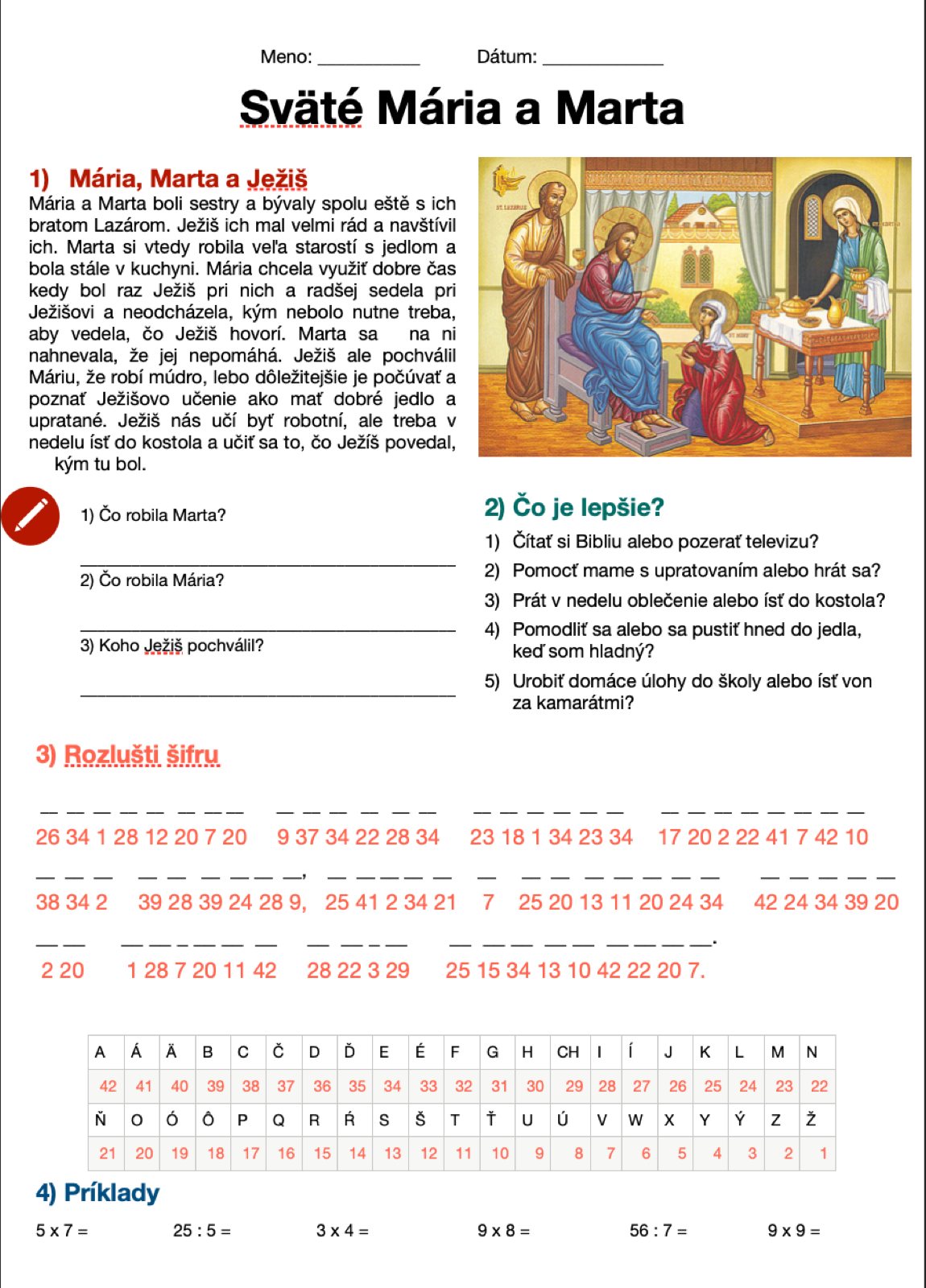
From spring we took up teaching the children in the Roma settlement of Mútnik. Every week we go there to play with the children and to teach them arithmetic, reading, writing and understanding a text, and of course to pray and to know God's commandments and Bible stories. It is very important, because for the last year the schools have been teaching at a distance, and there is no electricity in the Roma settlement of Mútnik, so the situation is very bad. We tried different methods and materials until we ran out of them, so we worked our way to our own worksheets. You can take a look. :)
Over 4,5t of clothing in the barn
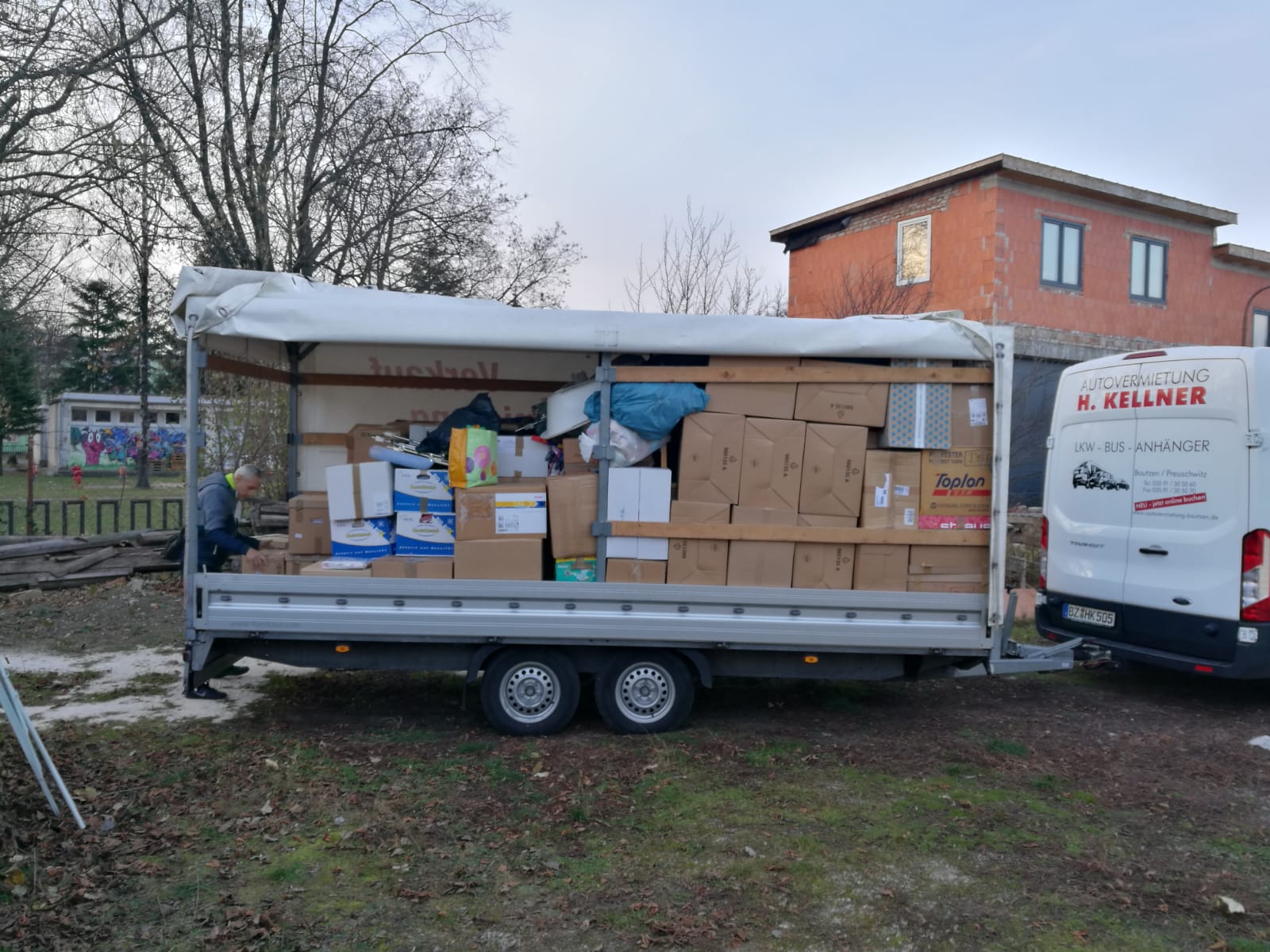
Clothes from Germany
At the end of summer, thanks to Mr and Mrs Soldán, Christians from Germany brought us two vans full of clothing, about 4,5t altogether. So with the help of Mr Hruška we turned the barn into a distribution store and threw ourselves into charity on a large scale. There was great interest in the charity, so we had to limit it to the families we work with long-term (the poorest). Everyone had to sign up for a particular day on a waiting list, so that crowds of people would not form in our garden. We also limited the number of items per family according to the number of family members and set a contribution of 20c for each piece of clothing. With this we wanted to stop clothing being thrown away, which used to happen, and also to make sure of an even distribution among all the families. Hanka and Verona from Dolinka (our Roma settlement) helped us with the distribution and the sorting of the clothing. The winter clothing charity was held at their homes over the winter, when the covid measures did not allow us to hand it out at our place. For now we have stopped the charity until Míša recovers after giving birth and is able to start it up again, with two little ones at her side. In time we would like to move it entirely into Roma hands and act only as go-betweens. Please pray for this.
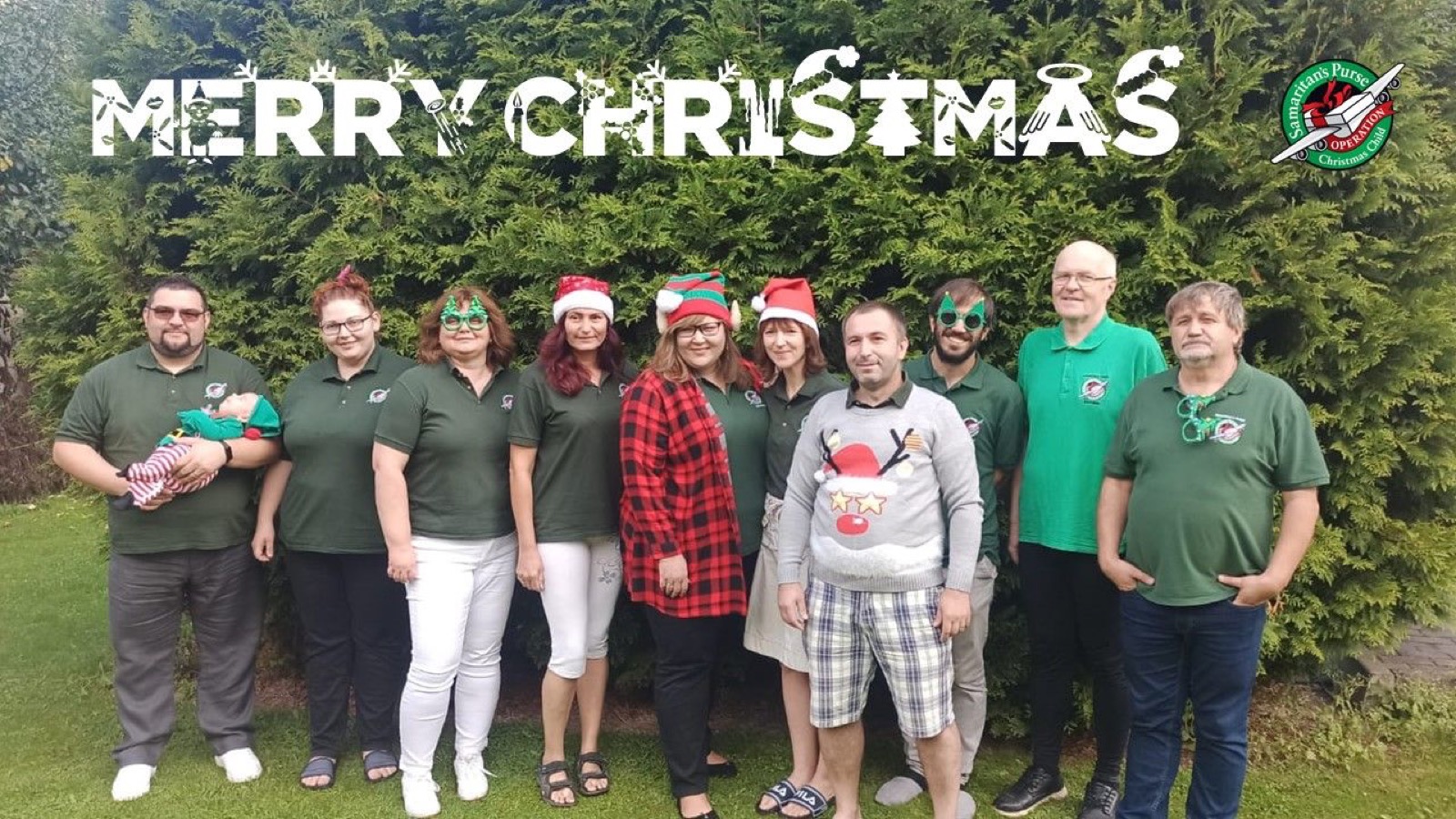
TGJ volunteer team (Samaritan's Purse) Slovakia
Getting involved with Samaritan's Purse
During the year we joined the organization Samaritan`s Purse. Earlier we had already led the Najúžasnejšia cesta lessons in Mútnik. Since summer Martin has been the coordinator of the work for central Slovakia, and from May 2021 Míša joined the team too. We hope that in this way we will be able to inspire other workers in the region for work with Roma. Besides that, we brought the children of Dolinka aged 6 to 14 into the Vianočné dieťa program, where each child received a nice package of gifts. The children were divided into small groups by family, and after the gifts came a program of 12 lessons of Najúžasnejšia cesta. Each child received a beautifully made textbook with Bible stories and God's truths and came to learn on the weekends. We see God at work in this, because almost all of them kept coming for all 12 lessons, and they came very disciplined, on their own and on time every weekend. Before, we never managed to keep them in any “learning” activity for longer than a few weeks, let alone have the children come by themselves without being reminded. Glory to God for this, and that through it he opened the children's little hearts to his Word.
Renovation
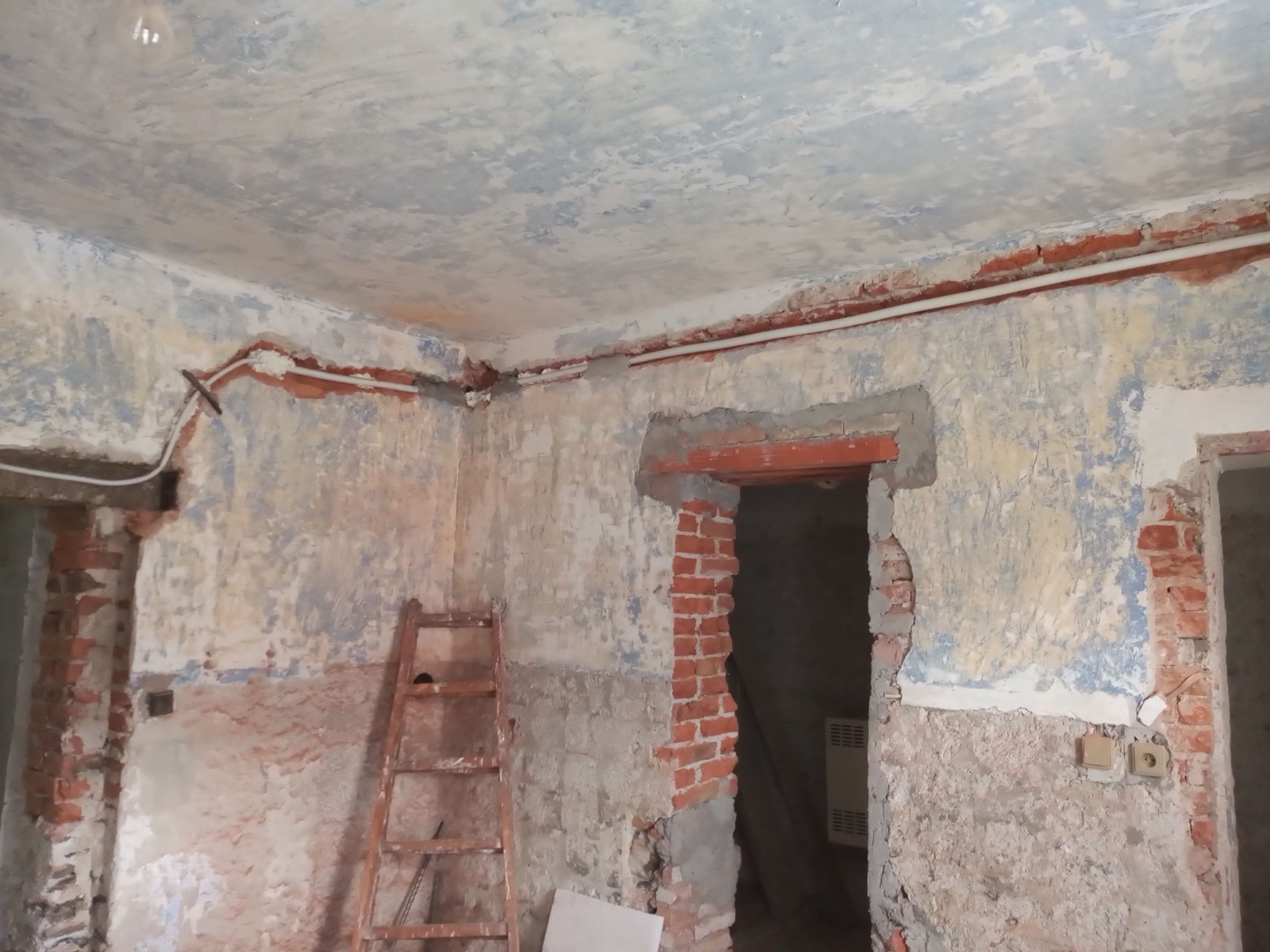
Our other activities are acts of building. :-) At the start of summer we put up a cross with our Lord Jesus Christ in the Roma settlement of Mútnik. It is to remind the people there of God's presence everywhere and of his loving sacrifice, and to give them a place for prayer and stillness. The very next week Fr. Štefan Pružinský accepted our invitation and blessed the cross. The blessing was followed by a small outdoor celebration, where the local people could get to know the priest and his family a little. The second act of building was the construction of a small chapel as part of the renovation of our house.
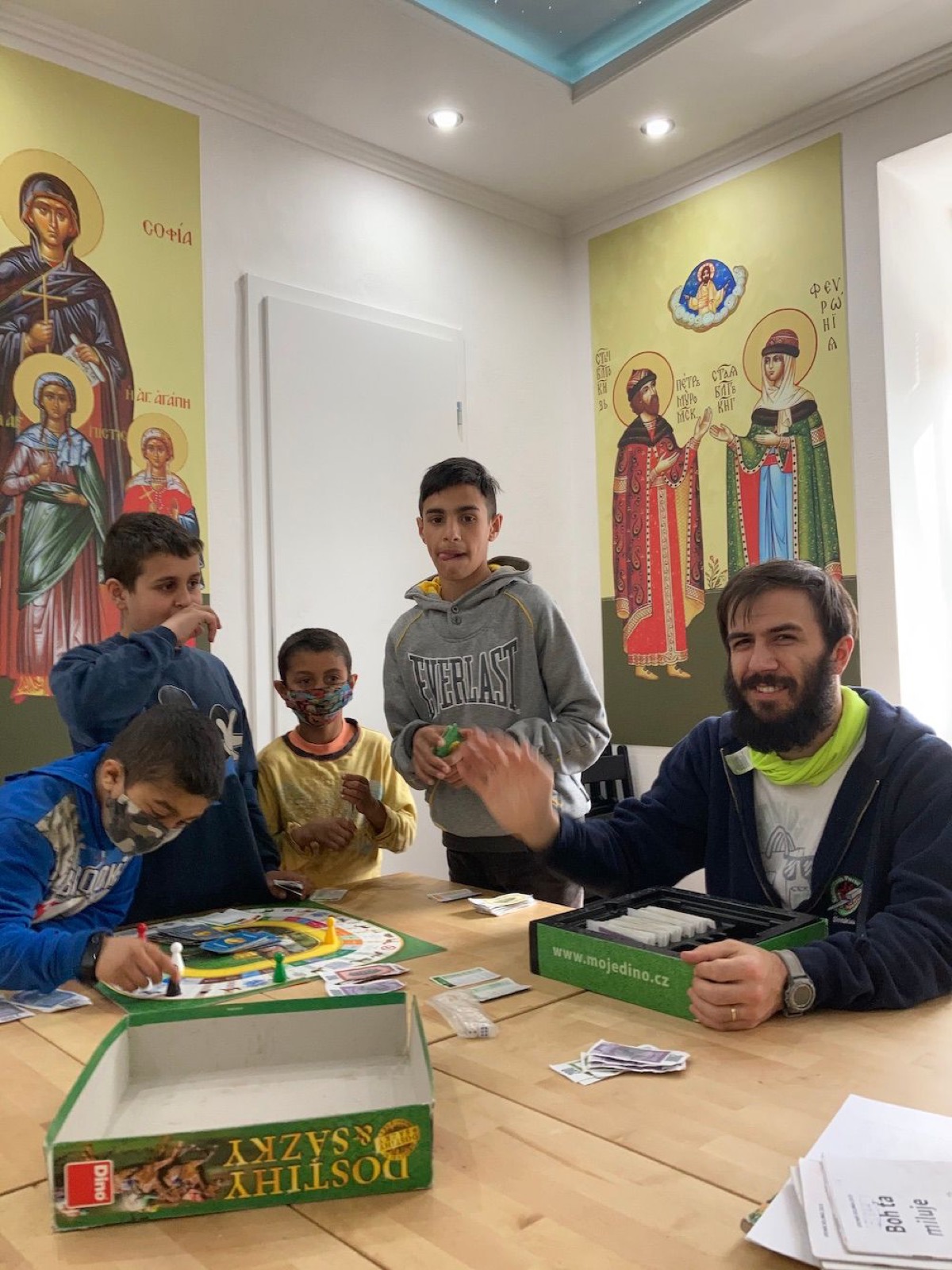
On the lower floor, a former small kitchen became a liturgical space and a classroom at the same time. This is where the Najúžasnějšej cesty lessons took place. The chapel was consecrated on the Orthodox feast of St. Nicholas, who also became its patron. Its walls are decorated with icons of St. John Chrysostom and Basil the Great, the great teachers of the Church, then the Archangel Michael, commander of the heavenly hosts and our protector, Sts. Peter and Fevronia, patrons of the family, the holy martyrs Sophia, Nadezhda, Viera and Luba, and of course St. Nicholas. But the main one is the Lord Jesus. His birth and resurrection are on the front wall, the crucifixion is opposite the door, and his beautiful image is set in a shining starry sky. Since the beginning of the year there have been 2 baptisms in the chapel, and now the baptism of our daughter Mária is ahead of us. Every Sunday there are services for children here. They begin at 9 o'clock with games, at 10 we begin to pray and sing, and from about half past 10 the teaching about God begins, through play and worksheets. We are also trying to get Saturday evening prayers for adults going, but so far they do not have a regular form.
Translations into Romani
Our other undertakings are translations. The Bible Society approached us. They would like to start translating the Bible into the Central Slovak dialect, but they first need to find out how much interest there is, where the boundaries of the dialect lie, and to find local co-workers. So far we have tried to find out about the interest, and whether such a translation is needed, but the work has not got very far because of lack of time. Many of you already know that Martin has started studying Orthodox theology, so know that the time for writing his thesis is drawing near. :-) Connected with this is the second translation project: translating the Liturgy of St. John Chrysostom into the Central Slovak Romani dialect. One day we would like to serve the liturgy in the Roma people's own language, one they understand. What inspired him for this was the Serbian translation into Serbian Romani. It convinced him that no language is less suitable even for the holy liturgy, as long as it helps people toward salvation. But the main work is still ahead of him.
Our own Dolinka
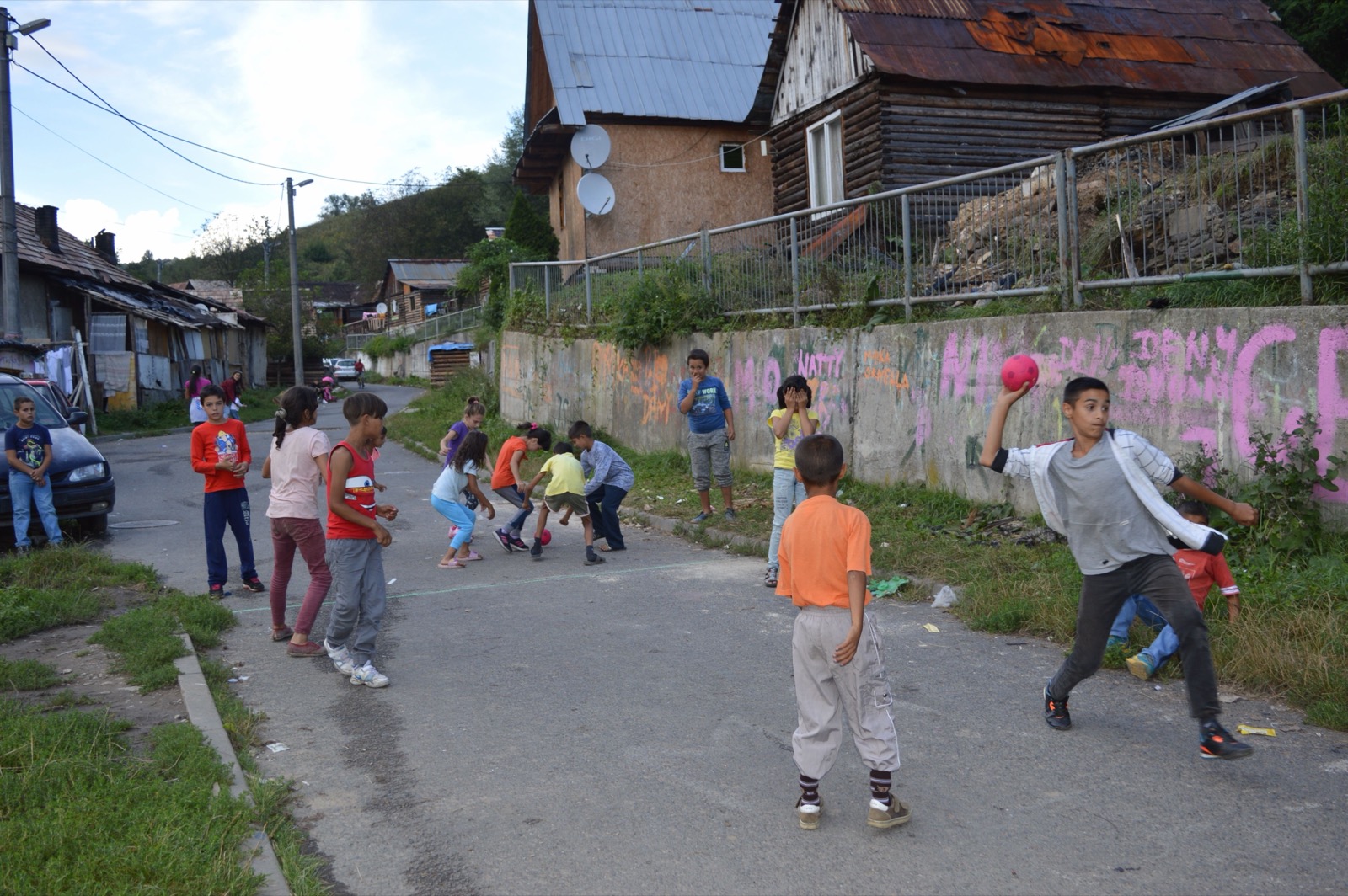
Over the year we did not forget our Dolinka either. When the covid measures came in, it was no longer possible to go to the gym with the children on Mondays, so we gradually came up with treasure-hunt games. We prepared 5 envelopes with instructions for the children, and Martin secretly went to hide them around Dolinka. The children then, one by one or in small groups, solved the tasks in the envelopes and tried to track down further clues and, of course above all, the hidden treasure. When the measures were eased, it became possible again to visit Dolinka, and to sing and play games with the children in the usual way. They still enjoy football, dodgeball, “tag” and “šmúračky”, but we also teach them new games like frisbee, handball, … We also tried not to forget the adults, and to visit the families from time to time. We saw how important it is to be seen and to come to them. Otherwise relationships quickly weaken, and envy spreads that one person was helped and another was not, and gossip and so on. But when a person stops for a moment to chat, or at least to say hello, relationships at once become more personal, and people value the interest shown. Then there is not as much room to believe and spread gossip or complaints. Unfortunately, with work duties and small children, there is not as much room for these visits as there used to be, or as we would like.