 He had never seen greater poverty
, so he decided to help. Martin moved into a Roma settlement and brought hope
He says he has never seen greater poverty than in the Roma settlements in Slovakia. Years ago, Martin, who works in IT, decided to help poor Roma families in Klenovec and told himself that the best way to get to know them was to live with them. The devoted young man began to help with money, but also by teaching the children to read and write and encouraging the adults to work. That is the only way, he says, that they can break out of fixed stereotypes and poverty passed down from generation to generation.
Martin felt sorry for the children in the Roma settlements, so he tried to help them. “I had never seen such poverty. It probably moved me, because before that I didn't even like the Roma very much,” says the volunteer. His wife Michaela notes that it is hard for children to change when “their community keeps pulling them down.” She adds that children need a positive example, and that is hard to find there.
When Martin moved to Klenovec, his door at home was always open. “I never knew what state it would be in when I came back. Sometimes it was a mess, sometimes it was tidy and smelled nice,” he recalls. The Roma welcomed Martin among them. They taught him, for example, how to work with wood and, in his own words, also respect for older people.
He wants to show that it can be done
Before Martin met his wife, he counted on no woman staying with him. “I planned to keep living in the settlement and give away the money I earn,” he says with a smile. “Then such a miracle happened that she said she was fine with it,” he adds.
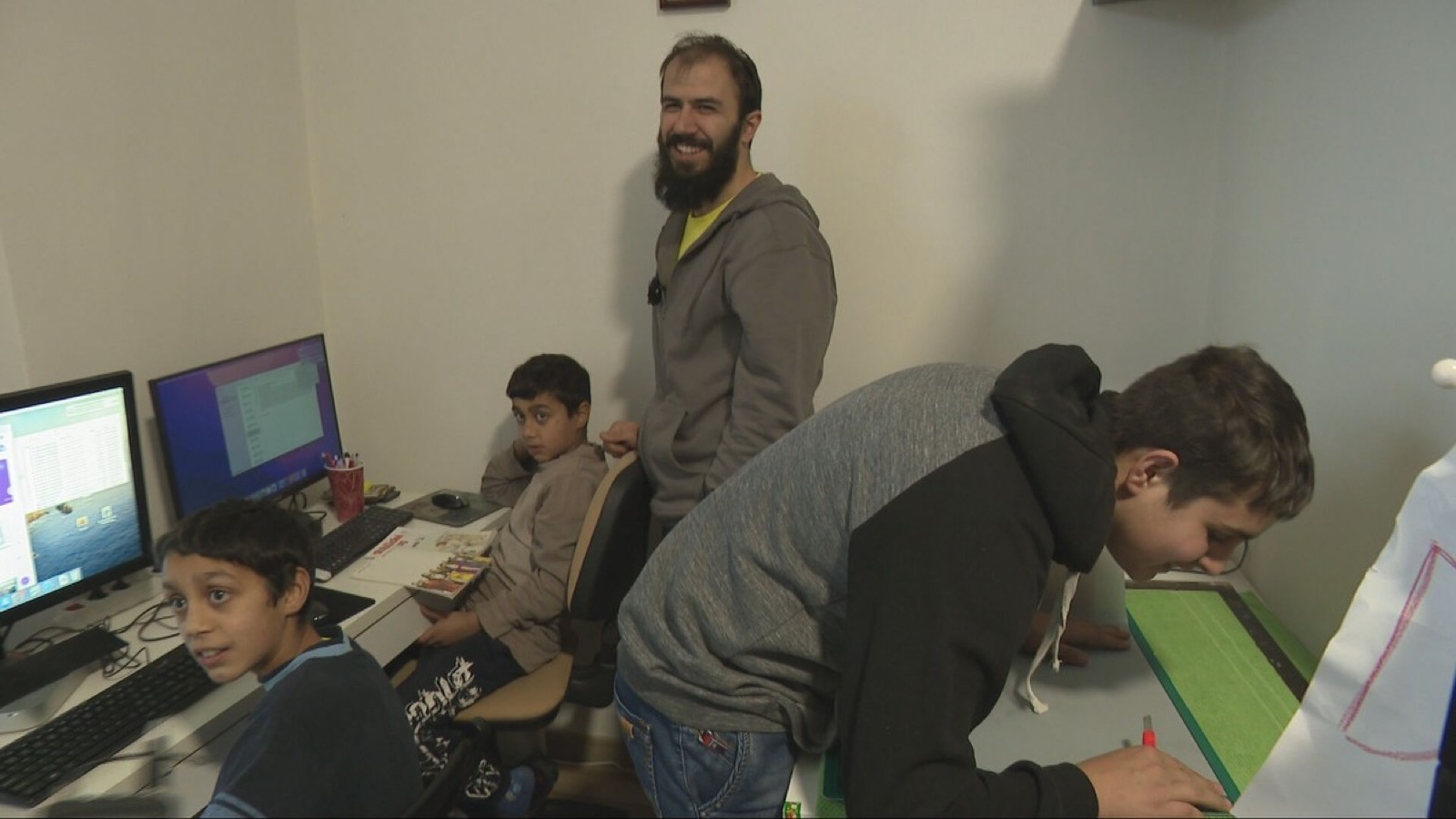
Martin and Michaela broaden the children's horizons also by taking them on trips. “They get to know the region, Slovakia, and also other people,” says Michaela. Martin also makes T-shirts with the children and teaches them to work with a computer. “They learn to type on a computer, and also graphics. So that they can see the point of doing graphics, we print it on T-shirts, so there is some result,” he explains.
The young volunteer believes he can bring hope into hard conditions. “That it can be done, that you can become a bricklayer or finish secondary school or university. In their surroundings they don't know anyone who has done this,” Martin concluded.
Reprinted in full, as published: Markíza · TV Noviny, 31 January 2024, by Denisa Czibulka, Milan Špak. Original article or video →