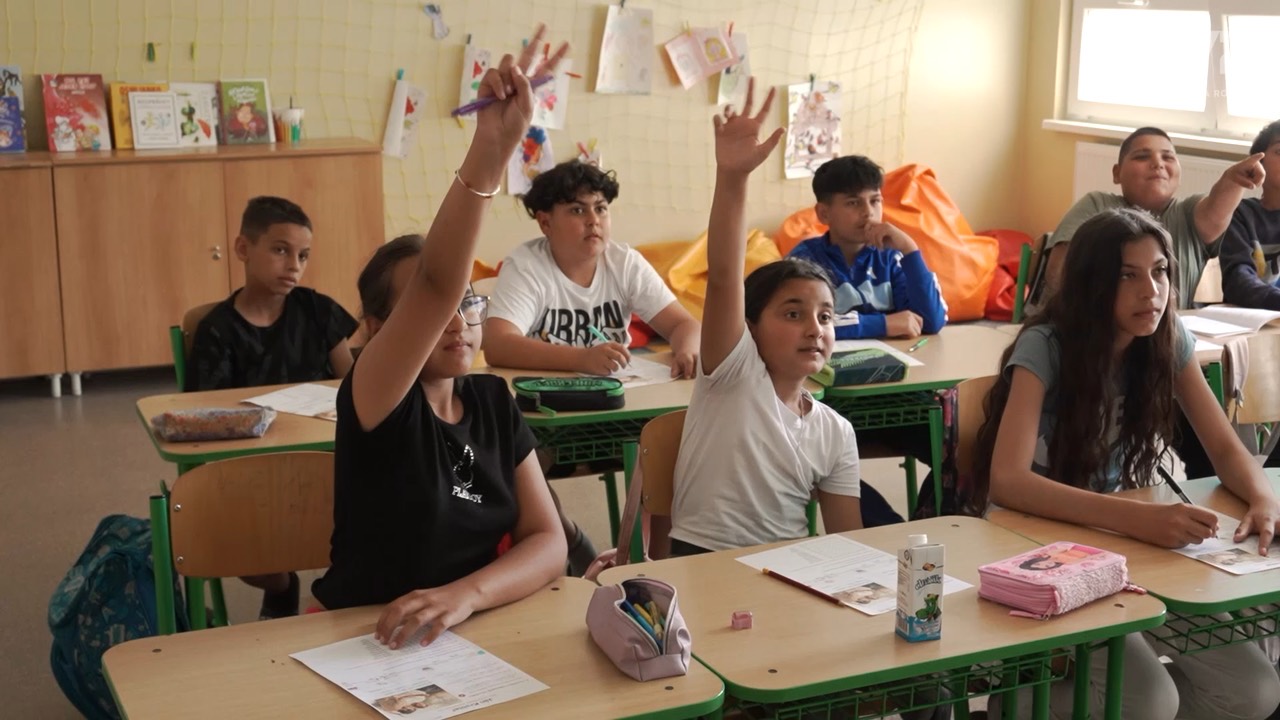
They are the children of our villages. In twenty years they will be among those who work in Slovakia, or among those who have no work.
Atlas rómskych komunít 2019 records 825 municipalities. Each dot is one municipality. The bigger the circle, the more people live in settlements in the municipality, on its edge or outside it.
Klenovec, Markovce, Kačanov.
Varadka, Závadka, Zemplínske Jastrabie, Mútnik (Hnúšťa).
Cejkov, Kurov, Lukov, Petrová, Strážske, Zbudská Belá, Bežovce. A local parish is already there; we support the priest who serves in it. More at romamission.eu →
Central Slovakia (24): Banská Bystrica, Breznička, Brusno, Dražice, Fiľakovo, Heľpa, Ivanice, Jelšava, Kremnica, Lučenec, Michalová, Muránska Dlhá Lúka, Nenince, Nová Ves, Pliešovce, Prievidza, Revúca, Rimavská Píla, Rimavská Sobota, Rimavské Janovce, Ružomberok, Sirk, Sušany, Vrbovce nad Rimavou.
Eastern Slovakia (37): Černochov, Falkušovce, Jarovnice, Košice, Ostrovany, Poprad, Rokycany, Skrabské, Soľ, Stará Ľubovňa, Šamudovce, Veľká Lomnica, Veľké Kapušany, Bystrany, Krížová Ves, Cernina, Dobšiná, Gemerská Poloma, Chminianske Jakubovany, Lipany, Lučivná, Malý Slavkov, Mengusovce, Prešov, Rankovce, Ratkovské Bystré, Ražňany, Sabinov, Slavkovce, Spišská Nová Ves, Spišské Vlachy, Šarišské Jastrabie, Štítnik, Veľký Šariš, Vyšný Klátov, Zemplín, Žehra.
| Region | Municipalities | Of these, with a settlement outside the municipality or on its edge | People in recorded settlements |
|---|---|---|---|
| Košice | 224 | 172 | 91 260 |
| Prešov | 224 | 186 | 103 734 |
| Banská Bystrica | 210 | 101 | 31 284 |
| Nitra | 71 | 37 | 14 119 |
| Trnava Region | 38 | 17 | 6 699 |
| Bratislava Region | 22 | 17 | 6 016 |
| Trenčín Region | 21 | 12 | 4 528 |
| Žilina Region | 15 | 9 | 4 202 |
| Slovakia | 825 | 551 | 261 842 |
Roma live in Slovakia, roughly 7.6% of the population.
Atlas rómskych komunít 2019, p. 17municipalities have a Roma community. Three regions, Košice, Prešov and Banská Bystrica, have 658 of them together.
Atlas 2019, p. 28concentrations where 300 thousand people live. 194 of them lie outside the municipality.
Atlas 2019, pp. 17 and 33of the people in Rimavská Sobota district, where Klenovec lies, are Roma. In Revúca district it is 33%.
Atlas 2019, p. 30of children from marginalized Roma communities aged 3 to 5 go to kindergarten. Overall it is 75%.
Ministry of Finance of the Slovak Republic, 2020, p. 57of young Roma aged 20 to 24 have finished secondary school. In the whole population it is 90%.
EU Agency for Fundamental Rights, 2022Between kindergarten and secondary school there are nine years when a child is either led by someone or led by no one. Those are the years in which we work. All the numbers about school, age by age →
All of Europe is getting older: in 1900 one in four people in the world lived in Europe, today not quite one in ten. In Slovakia, according to Infostat, this will affect the job market, pensions, health care and social services most.
fewer people aged 15 to 64 between 2017 and 2060, which is 26.6%. There will be 760 thousand more seniors.
Infostat, prognóza do roku 2060 (2018), p. 68of children under 15 in Slovakia were Roma children in 2012, according to the Infostat model; in 1980 not quite 7%. For 2030 it expects more than 21%.
Šprocha, Infostat 2014, pp. 147 and 148 · a model, not a censusof young people from marginalized Roma communities aged 18 to 24 left school early. In the whole population it is 7.6%.
EU SILC MRK 2020, p. 99was the employment rate of Roma in 2017. Other residents of the same municipalities: 51%.
Inštitút finančnej politiky, 2018, p. 1In a society that is getting older fast, future pensions and social services will depend more and more on today's young Roma.
Low qualifications and skills are the main barrier to employing Roma from municipalities with concentrated settlements.
Europe's share of the world's population: 24.7% in 1900 (UN, The World at Six Billion) and 9.1% in 2024 (UN, World Population Prospects 2024). This is the number of people who live on the continent. Eurostat estimates the loss of people of working age by 2060 at 893 thousand.
That is how much higher Slovakia's GDP would be, according to the World Bank (2012), if Roma had the same chances of work and the same wages. An older estimate from 2009 speaks of 7 to 11% of GDP.
World Bank, 2012, p. 5 Marcinčin and Marcinčinová, 2009, p. 5higher employment among Roma in Slovakia who finished secondary school, compared with those who finished only primary school.
World Bank, 2012, p. 6“Mentoring and tutoring programs are considered the most effective intervention strategies.” And right after: “However, there is no systematic support for mentoring and tutoring.”
Ministerstvo financií SR, 2020, p. 77What the omamy do for the youngest, we want to do for children from 6 to 13. The plan for what comes next →