The numbers are from Atlas rómskych komunít 2019. Each one has a link to the source and the page.
The Atlas counts 417 thousand Roma in 825 municipalities; four out of five of those municipalities are in the east and centre of Slovakia. Map of all 825 municipalities → Atlas rómskych komunít 2019, pp. 17 and 28
live integrated, together with the other residents of the municipality. The rest live in concentrations.
Atlas rómskych komunít 2019, p. 17people in a concentration, if we take the middle value (the median).
Atlas rómskych komunít 2019, p. 31of people from Roma communities live in the countryside. Of 1 102 concentrations, 828 are rural and 274 are urban.
Atlas rómskych komunít 2019, p. 31of communities mostly speak Romani, above all in central and eastern Slovakia. In 35 % mostly Slovak, in 18 % Hungarian, mostly in the south.
Atlas rómskych komunít 2019, p. 17Roma communities make up the biggest share of a district's residents in the districts of Revúca (33 %), Rimavská Sobota (31 %) and Gelnica (30 %). Atlas rómskych komunít 2019, p. 30
A more recent mapping from 2025 lists 851 municipalities and 1 142 localities. Sociografické mapovanie rómskych komunít 2025
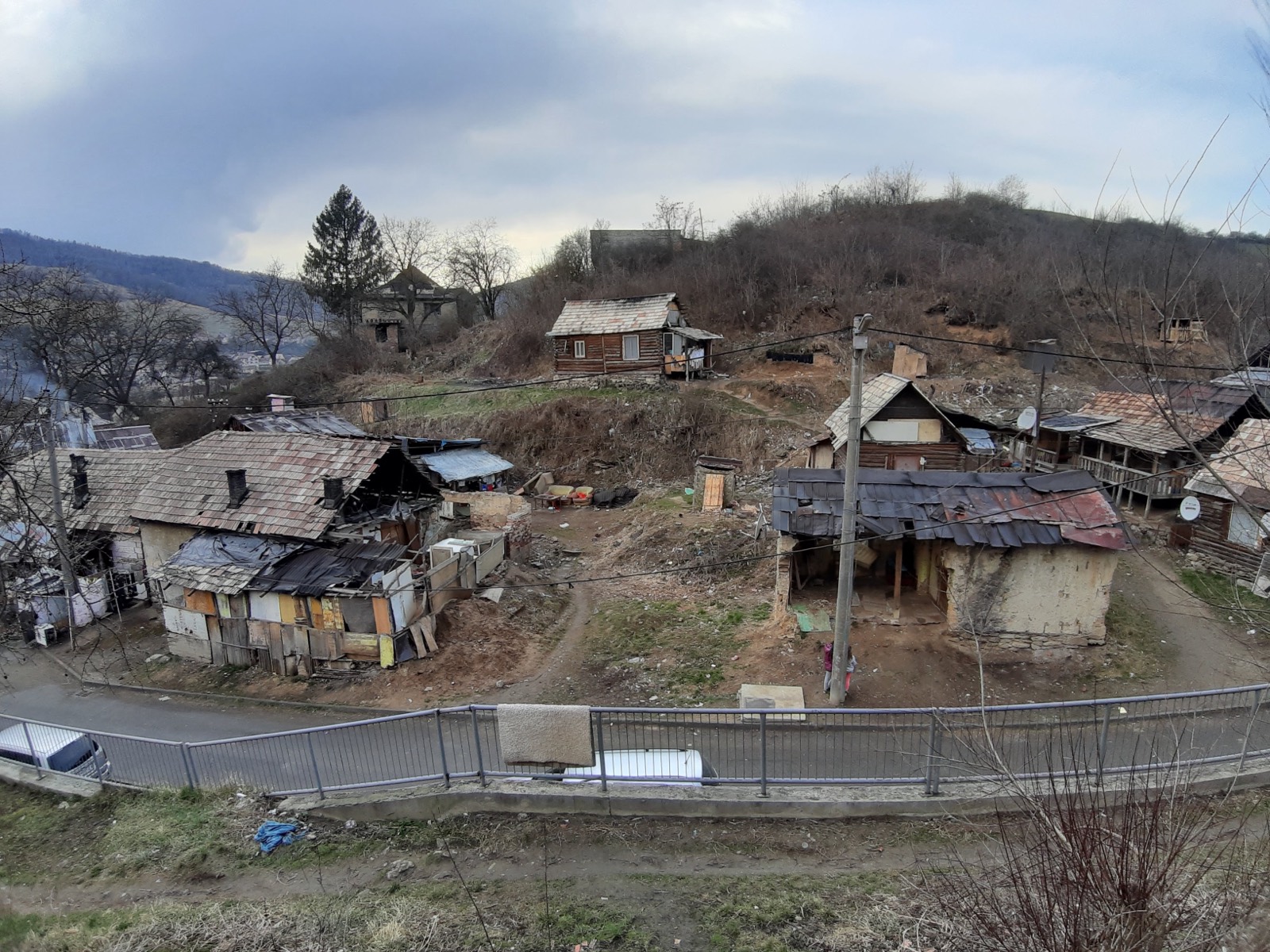
That is what the Atlas calls any built-up area where several households seen as Roma live. It includes a Roma settlement outside the village, but also a Roma street, a neighbourhood or a whole village with a Roma majority. Atlas rómskych komunít 2019, pp. 17 and 33
Most often they are separated from the centre of the village by a field or meadow (79 %), a river or stream (63 %), a railway (30 %) or a forest (17 %). The typical distance is 800 metres. 56 thousand people live in them.
Atlas rómskych komunít 2019, pp. 33 and 34The most common case. 151 thousand people live in them.
Atlas rómskych komunít 2019, pp. 33 and 34A concentration right in the village, among the other houses.
Atlas rómskych komunít 2019, p. 33The Atlas recorded a wall that separates a concentration from the village in five places. Atlas rómskych komunít 2019, p. 34
The Atlas says this in general terms: the further from the centre of the village, the lower the quality of housing, the coverage by utility networks and the availability of services. Atlas rómskych komunít 2019, p. 17
of people from Roma communities live legally: in flats or in houses that have passed final inspection, on land whose ownership is settled.
Atlas rómskych komunít 2019, p. 18people live in one dwelling in the concentrations. The average for Slovakia is fewer than three.
Atlas rómskych komunít 2019, p. 18use the public water supply. For the other residents it is 93 %. About 33 thousand people take their water from an unprotected source.
Atlas rómskych komunít 2019, p. 18use the sewer system. For other residents of the same villages it is 83 %.
Atlas rómskych komunít 2019, p. 18It is getting better. In the villages that were in all three Atlases, 49 % of people used the public water supply in 2004, 57 % in 2013 and 64 % in 2019. Atlas rómskych komunít 2019, p. 18
For children it is not just discomfort. When classmates find out that they have no electricity at home, they laugh at them; when they find out they have no shower, they are disgusted by them. That is how we see it in the classrooms attended by the children from Roma settlements whom we teach.
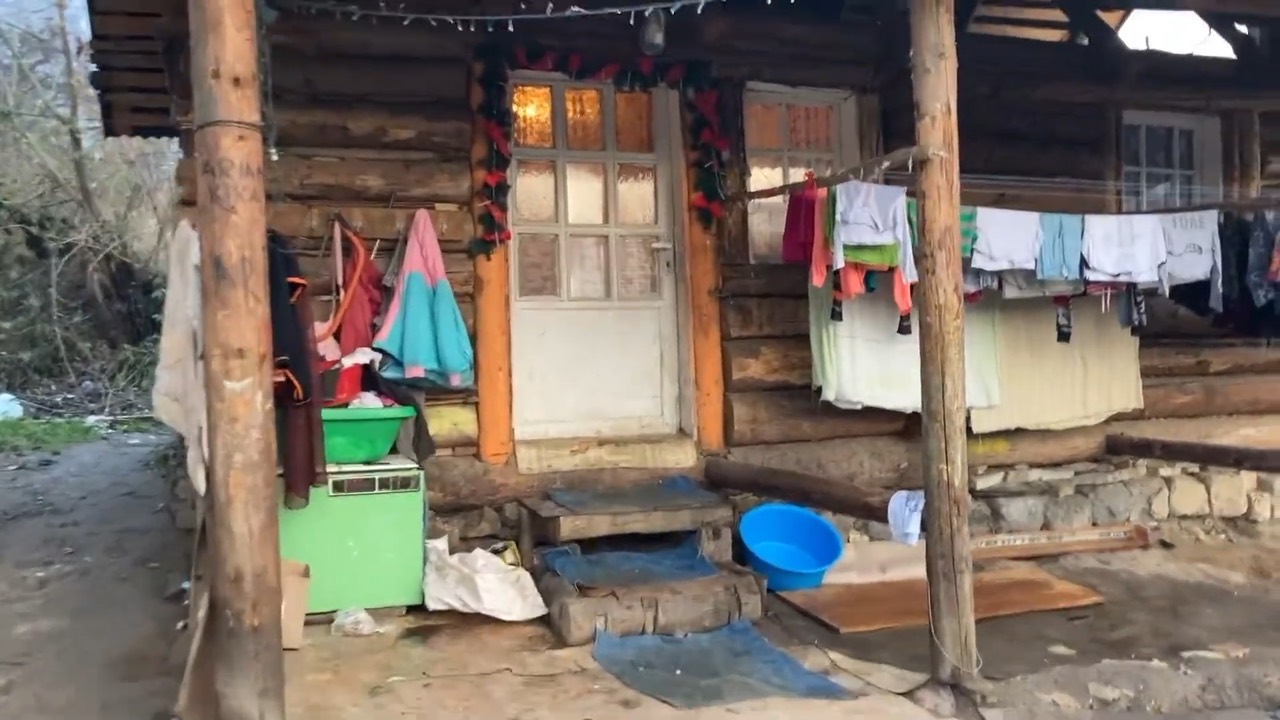 Our videoHow people live in a Roma settlement
So that he would really know the people, Fr. Martin lived right among them. Since then he has known what each family needs. We teach in Klenovec, in Markovce and in Kačanov; Klenovec belongs to the Rimavská Sobota district, which has more villages with Roma communities than any other in Slovakia.
To teach and play with Roma children in central and eastern Slovakia. The first two years in the community are mostly games, and little by little there is more and more teaching.
We use Christian materials. If that would go against your conscience, get in touch with us anyway.